I have been reflecting recently on the difference between ‘nature-based’ and ‘nature-led’ activities. Is this just fiddling with words, or is there a real difference between the two concepts? And if they are not the same, why should organisations like WiseHooves strive for our activities to be nature-led rather than nature-based? Here are some of my thoughts – so far.
It starts with power
I’ve spent my whole career engaging with different sorts of power issues, from supporting education systems to use learner-centred rather than teacher-dominated methods, to campaigning for an end to Israel’s colonial occupation of Palestinian land. Increasingly, I’ve focused on the global power imbalances that are destroying the environment; the selfish behaviour and over consumption of a minority of wealthy, powerful companies and individuals.
Now, through my daily interactions with WiseWoods, I’ve had more chances to consider these global issues at the local level and think about the impact of our (human) power on nature.
Every time I walk in the woods I’m conscious of what I’m treading on, touching or disturbing and I reflect on my right to do that. You could say that I own the land, so I can step on and touch whatever I want. But I don’t believe a document with my name on automatically gives me the right to wield complete power over the nature on that land. It’s a feeling I’ve had since childhood, although I wasn’t able to articulate it then.
Working with horses as partners
Growing up as a horse-mad little girl, I was taught that I had to assert my power over a horse. “Show him who’s boss” was a common instruction. But I soon realised I was happiest when I wasn’t trying to be the boss of our old cob. I took greatest pleasure from sitting under the old beech tree with him, telling him my problems while he snoozed or nibbled my boot. I didn’t want power over him. I wanted simply to co-exist with him, try to understand him, and hope in his way he might understand me and all my teenage problems.
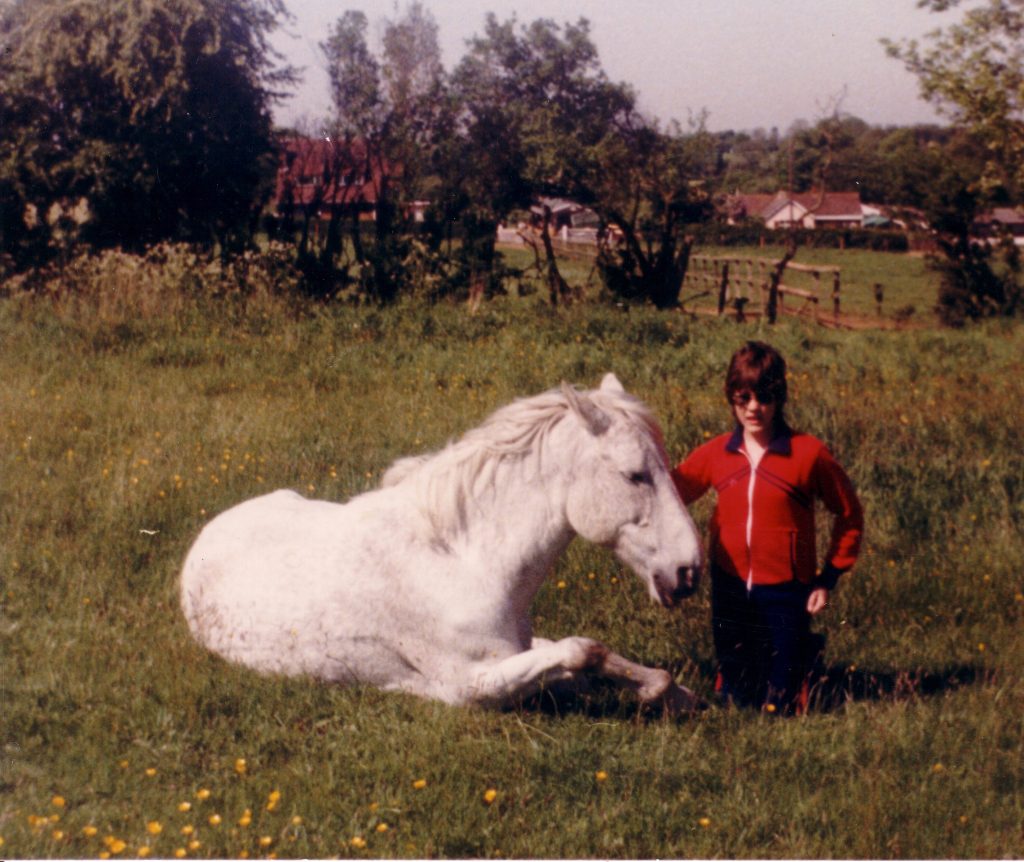
Fast forward a few decades and this experience with Cobby influenced my selection of course when I decided to take the plunge and train in life coaching with horses. I had a choice between a training course in ‘equine assisted learning’ (EAL) or one in ‘equine facilitated learning’ (EFL). This might seem like one small word of difference, but it can be a world of difference. I chose EFL.
The difference between EFL and EAL
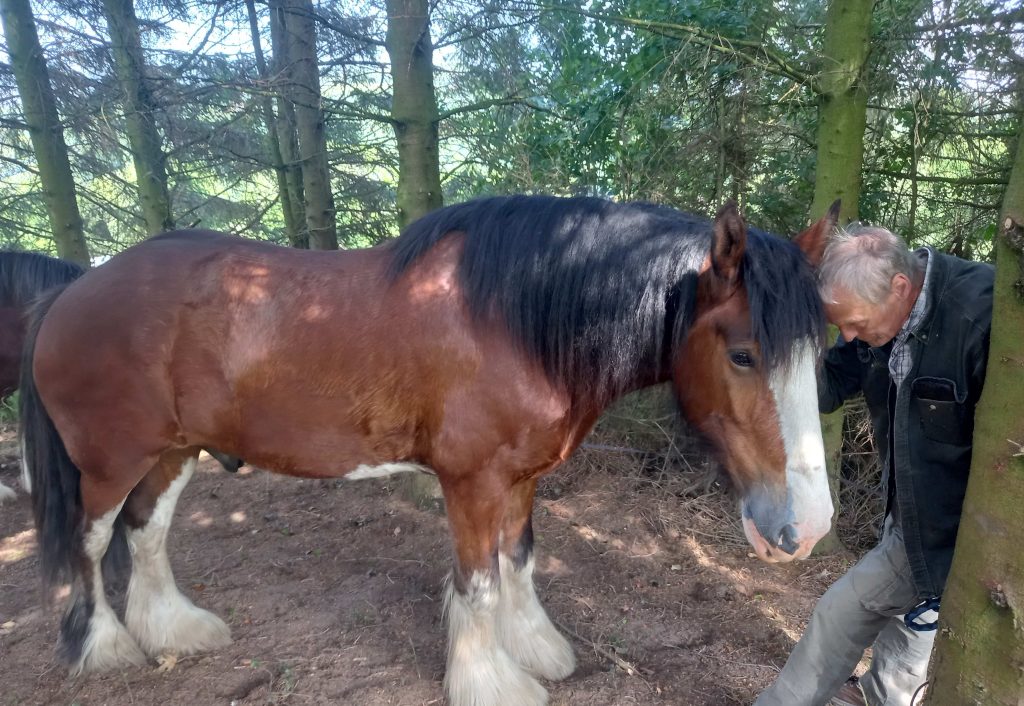
In EFL, we see horses as partners (co-facilitators) in a flexible and fairly open-ended process of self-reflection. Clients might have a longer-term goal that has motivated them to start attending sessions, such as building their confidence to apply for a new job. But the EFL process is about exploring their interactions with the horses and how they might interpret both horse and human responses. In an EFL session, the facilitator responds to what is emerging for the client rather than pushing or motivating them to achieve a predetermined outcome. Human and horse are partners in a reflective and emotional process – neither has more or less power over the other.
In EAL, the horses are used to assist, like a tool, in a more goal-oriented process involving structured tasks with specific objectives. Although there is usually no intention of the client imposing their power over the horse, the horse is not leading the process. Both horse and client are following the EAL facilitator’s instructions. Potentially, more power lies with the facilitator than with the horse.
For me, EFL is a process for recognising and understanding power relations. Through the activities we do, clients often feel they are empowering themselves – getting more confident, self-aware, assertive, and so on. But they achieve this empowerment through building a relationship with the horse, rather than by trying to disempower the horse. EFL shows us in practice the idea that power is infinite; empowering one does not mean disempowering another. We can co-exist, peacefully and in a mutually beneficial way, without any one person or entity needing to exert more power over another.
When I look at the world, I see the rapidly growing wealth and poverty gap, the unimaginable power wielded by huge corporations and the shameful exploitation of and discrimination against millions of people, and I wish more humans could learn about power relations from horses!
Transferring these principles to our work in nature
Now that my work is expanding to enable clients to engage with the woods as well as horses, I’ve been reflecting on how to apply the EFL principles to nature. How can I work with clients in a way that respects the power of nature in the process?
‘Nature-based’ activities are increasingly common: nature-based therapy, nature-based education, nature-based sports, and so on. By nature-based we mean the activity takes place in nature and/or using natural objects as prompts. Rather like in EAL, the nature-based facilitator plans the route or finds the features and objects to plan an activity around. Nature’s role is as a host and as an assistant. It calms and inspires, and the client takes from it what they need.
By contrast, nature-led activities are – as the name suggests – led by nature. The activities and processes are guided and shaped by the natural environment. The facilitator helps the client interpret or respond to what is happening in nature.
How might this look in reality?
As the facilitator of a nature-based activity, I might guide a client on a planned route through the woods, ensuring they encounter trees, plants, objects or views that I think might help with their thought processes. However, taking a nature-led approach, I might simply invite the client to choose a path intuitively or by following animal trails, sounds, light or smells. Can they allow themselves to be led by nature rather than being guided through the nature? It sounds simple, but it can be challenging for some clients.
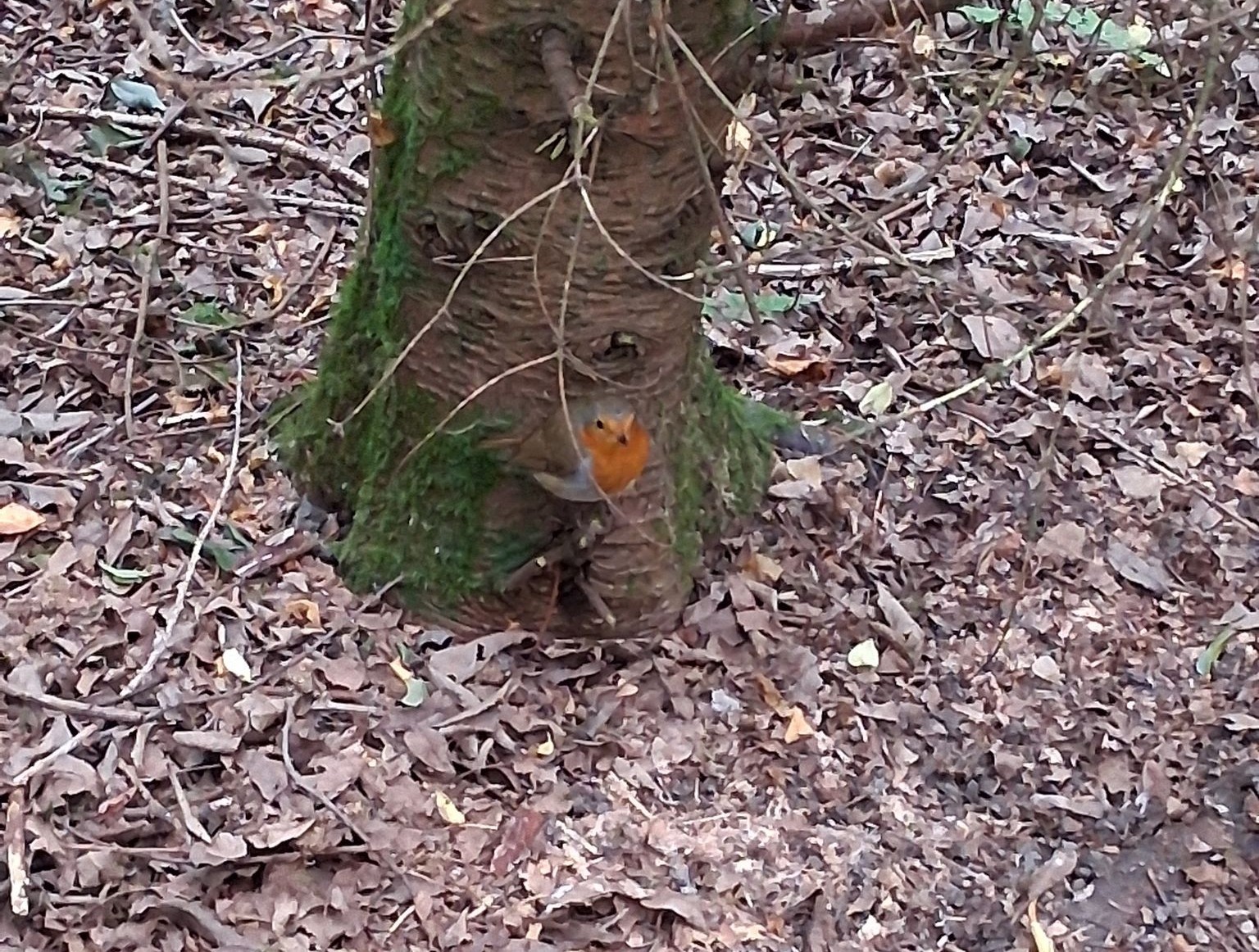
One of my favourite examples of a nature-led session was when a robin decided to follow us as we walked. At the point when the client was feeling overwhelmed describing their challenges, the robin hopped to the ground near their feet. He stopped the walk and the talk! We watched him hopping around our feet and then flitting from tree to tree in a circle above our heads. We stayed watching in silence for 15 minutes and then he disappeared. The conversation resumed but went in a very different direction, first reflecting on the robin’s world and then with the client thinking positively about small steps (hops!) that could be taken to overcome their challenges. We had not used pre-planned activities or objects to structure the session, simply been led by what was happening in the woods at that time.
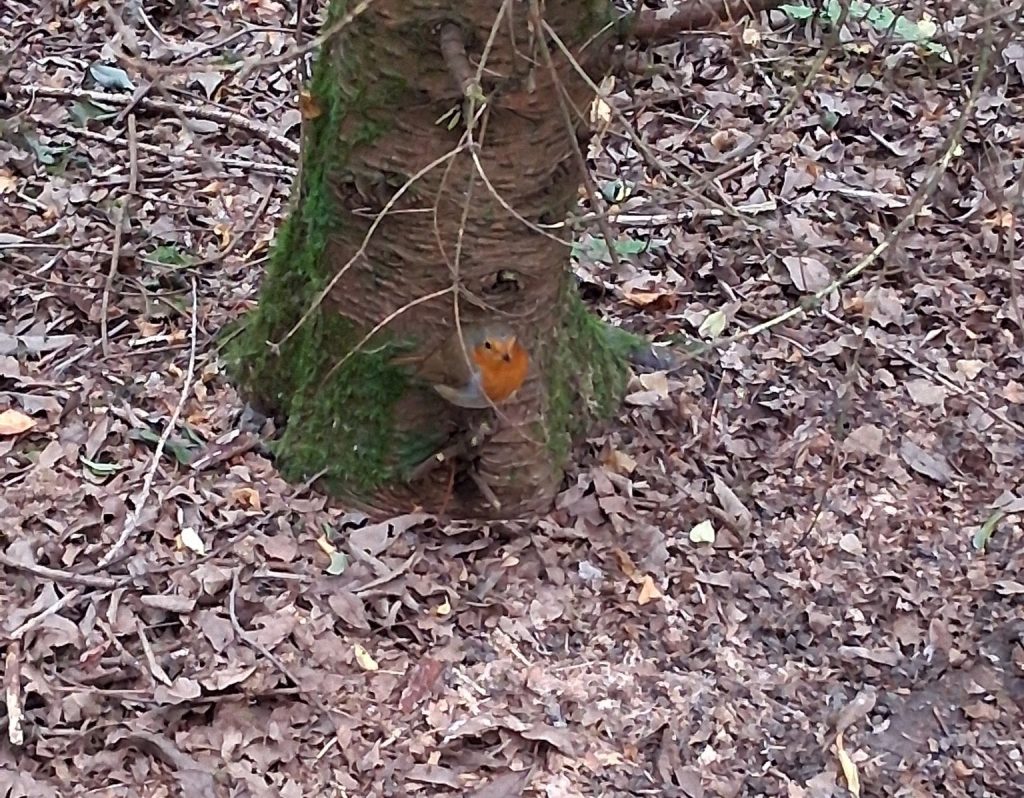
Of course, part of me then wished I could book Robbie to fly into every session! His input had been transformative. But then it would be pre-planned and not genuinely nature-led. In the next session there was no robin to guide the conversation, but mushrooms took the lead instead.
Each time I’m in the woods with a client or visitor, I understand a bit more how nature has the potential to empower us by giving us different ways to view our lives and the world in general. And those different perspectives hopefully help us to see how we can and should use our power to respect and protect nature, ourselves and each other.
Give it a go
Next time you’re out in nature, try to practise being nature-led. Switch off all devices and let your thoughts and movements be guided by the natural environment. For example, rather than setting out with a goal (“I need to walk for 30 minutes in fresh air because it’s good for me”), simply be in nature, notice what’s around you, choose your route by responding to your curiosity, stop to look at or listen to nature. If you can, give something back to nature along the way; maybe pick up some litter or pull out some invasive Himalayan balsam.
If you’d like to explore more deeply how a nature-led process could boost your wellbeing or personal growth, get in touch to discuss our equine facilitated learning and nature-led coaching sessions.