
My mum used to joke when I was younger that I was better at looking after sick horses than humans. She said I’d be the world’s worst nurse. She wasn’t wrong! When my parents did what parents do, and got old and needed looking after, elder care wasn’t a role I slipped into naturally. I lived 250 miles away for a start.
When a bonkers routine becomes the norm
Long-distance drives, often in the dead of night after receiving a panicky call, became the norm for several years. My brother lived nearby and did a huge amount of daily care. But he had his own stressful family health issues to contend with. So I made frequent, lengthy care stays with my parents, lasting weeks or even months.
After dad died and mum was on her own, I fell into a hectic visit routine. Daily care, household chores, arranging home accessibility improvements, navigating the social care system, chasing doctors, driving mum to appointments, sitting with her during emergency hospital stays. Alongside this, I maintained my full-time freelance job.
A typical daily routine involved working on the computer from 6am until mum got up, then a 12-hour day doing whatever she needed, before returning to the computer when she went to bed, often working into the early hours to meet deadlines.
We had professional care workers making home visits too. But what can they realistically do during one or two 30-minute visits a day?
Back home, I’d try to catch up on my work backlog and horse care issues. There were still multiple phone calls a day with mum, continued chasing of appointments, and the constant anxiety of waiting for the next emergency phone call.
Consumed by emotions
During these years, I went through every emotion possible: guilt, worry, fear, anger, frustration, exhaustion, desperation. On many drives home, I would wait for a quiet stretch of road with no other traffic and then scream at the top of my lungs.
Wherever I was and whatever I was doing, it felt like the wrong thing in the wrong place. When I was with mum, I was constantly stressed about the work that was building up, or about leaving Simon to look after two huge, high-maintenance horses by himself. When I was at home working, there was constant guilt and worry that I should be looking after mum instead.
Sitting on the ancient, single bed in mum’s spare room in the early hours, head spinning with exhaustion, I’d think, “this is it, I have no life” and then immediately be wracked with guilt.
I was doing way too much, yet it was never enough.
Searching for solutions
There was – is – no easy solution. Our social care system is so close to being broken. There’s no quick fix to relieve the pressure on people caring for elderly relatives.
I tried plenty of different ways to ease the stress or practise self-care. These often left me feeling more frustrated; just another chore I needed to cram into a bulging daily schedule. When I was at home, being with the horses was incredibly therapeutic, although I was often so wound up that Jack refused to engage with me until I brought him some calmer energy!
Eventually, I realised that what I really needed was to talk to someone, to share the bubbling, conflicting emotions. I wanted to say, “This is not fair; I hate it,” without worrying that I sounded like a selfish brat who just needed to stop moaning and do her duty.
I found someone, and we did a few outdoor walk-and-talk sessions. Of course, it didn’t directly solve all the practical challenges. It did, however, help me find enough headspace to think more logically about those challenges and put some of them into a healthier perspective. It also gave me a wee bit more energy to keep navigating the welfare system minefield.
Finding support at WiseHooves
This personal experience is why I’m now committed to supporting other people to navigate the roller coaster of elder care.
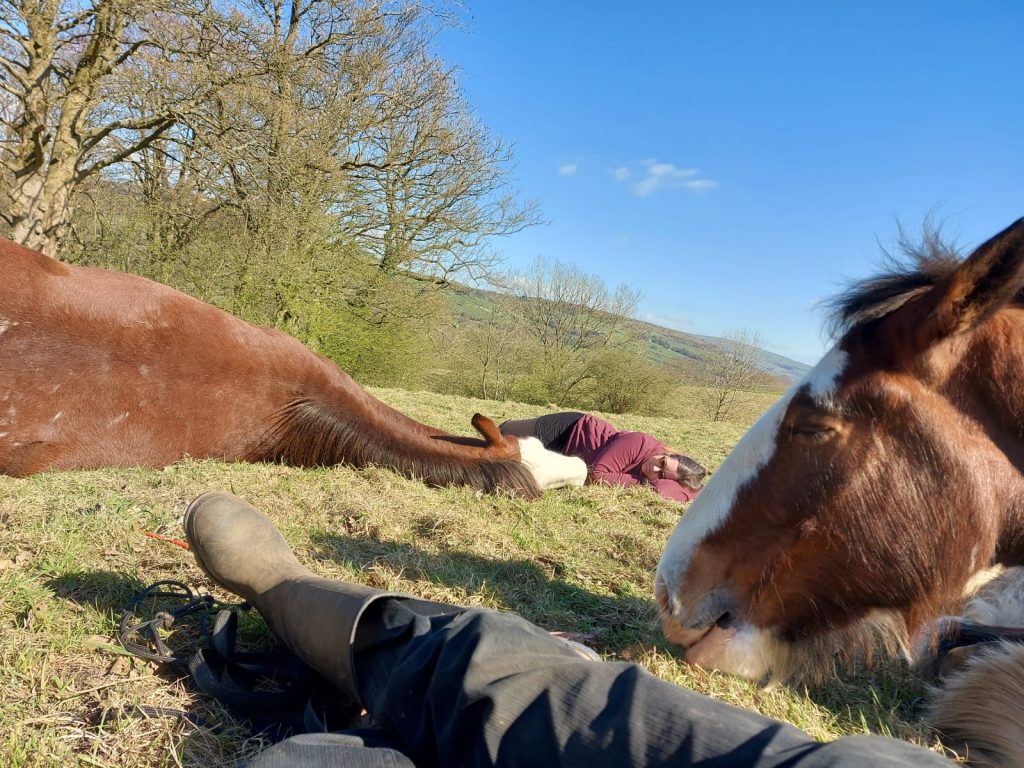
Through sessions at WiseHooves, with the horses or in the woods, you can:
- freely share difficult thoughts in an open, non-judgemental and confidential environment;
- find space to relax and breathe when you’re feeling overwhelmed;
- explore ways to reduce the stress, exhaustion, guilt or fear that comes with being a carer of parents;
- acknowledge the importance of boundaries and self-care, and start figuring out how to achieve them;
- discuss ideas for practical solutions to key challenges, if that’s relevant for you.
I don’t have easy fixes for you – elder care in the UK is facing deep, systemic problems. But often what we need in these situations is simply to be heard and have our challenges and frustrations recognised, without any expectation of finding a magic solution.
Flexible support is essential
One of the biggest challenges when we are in a parent-care situation is finding the time and energy to engage in anything we feel is ‘non-urgent’. Of course, looking after our own well-being is vital, but when there are a hundred other things to do, self-care always drops to the bottom of the list.
I could try to provide advice here on how to carve out dedicated time for yourself amongst the chaos. But realistically, I find the better option is to offer a very flexible service. If it feels impossible to allocate time each week on the same day, or to predict a week in advance which day might be a bit less busy, don’t worry. Last-minute bookings are possible!
My online booking calendar requires 24 hours’ notice, but offline I can often arrange a same-day session or fit in sessions outside our usual opening hours.
If the main thing holding you back is worrying about how to find the time, let’s chat
Book a free 30-minute in-person chat or online chat with me, to explore the potential benefits of WiseHooves sessions for you and work out how to fit them in.
If you want to arrange a chat at shorter notice than the booking calendar allows, message or email me instead.